
Dr. Dipak Giri’s Dalit Autobiography: A Critical Study: A Review
Reviewed by
Dr. Madhavi Latha. A
Assistant Professor & Research Guide
Anurag University
Hyderabad, Telangana, India
Email: [email protected]
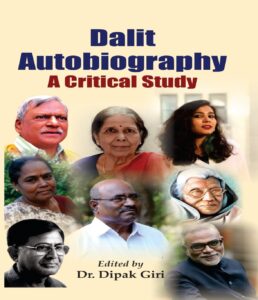
Dalit Autobiography: A Critical Study | Non-fiction | Dr. Dipak Giri
Rudra Publishers & Distributors (New Delhi), 2025, pp. xxv+240, HB, Price: Rs. 1190, ISBN: 978-93-48421-19-7
Dipak Giri’s Dalit Autobiography: A Critical Study brings together critical studies on notable Dalit autobiographers—both men and women—exploring how their works reflect alienation, resilience, gendered oppression, and the fight for dignity. The book presents how Dalit autobiographies have emerged as a distinct literary form, intertwining personal narratives with collective struggles, challenging caste hierarchies, and amplifying marginalized voices. It examines texts that blend “pathos” and “protest,” portraying personal suffering alongside broader social realities, and highlighting the transformative role of literature in fostering awareness and social change. Through these analyses, the anthology documents the lived realities of Dalit identity and resistance, making it a vital contribution to Dalit literary discourse (Giri xxiv).
Through the critical analysis of Akkarmashi (The Outcaste), Dr. Ranjana Sharan Sinha highlights how Sharankumar Limbale’s autobiography offers a deeply personal yet representative account of Dalit alienation and identity crisis. Her reading places emphasis on Limbale’s “hybrid” identity—born of a Mahar mother and Maratha Patil father—which complicates his social belonging and magnifies his existential conflict. Sinha underscores how hunger, social exclusion, and illegitimacy converge to shape Limbale’s life, yet education and Dalit consciousness become tools of liberation. Her analysis situates Akkarmashi within the broader struggle for dignity and self-definition in caste-bound India (Sinha 3).
Delving into Babytai Kamble’s Jina Aamuch (The Prisons We Broke), Harish Mangalam reveals how the text transcends a personal narrative to document the collective oppression of Dalit women, doubly and triply marginalized by caste, class, and gender. His analysis offers a detailed linkage between Kamble’s lived experiences and the entrenched misogyny in Hindu religious texts, identifying this as a root cause of systemic exploitation (Mangalam 14). Mangalam also underscores how Kamble’s work intertwines Dalit and female consciousness, framing it as both a social history and a call for reform through education and Ambedkarite ideology.
Breaking new ground in literary theory, Dr. Pramod Ambadasrao Pawar introduces the innovative framework of Trans-deconstruction: Theory on Monism to reinterpret Dalit autobiographies and his own work Resilience. His review challenges rigid binaries such as oppressor/oppressed, presenting caste and identity as fluid, dynamic constructs continually reshaped through acts of resistance (Pawar 28). He also highlights how both Resilience and Dalit life narratives transform personal suffering into collective testimony, fostering transnational solidarity and reframing resistance as a process of reconstructing identity and catalyzing broader social change.
By weaving together Derrida’s concept of “Center,” Said’s concept of “Other,” and Spivak’s concept of “Subaltern,” Dr. Samina Azhar and Dr. Supriya Mandloi’s study of Bama’s Karukku uncovers the complex layers of oppression faced by Dalit Christian women. Their analysis spotlights the intersection of caste, gender, and religion, revealing how marginalization persists even within religious institutions (Azhar and Mandloi 36).They highlight Bama’s transformation from victim to voice of resistance, framing her life as both personal testimony and political critique, and positioning her work as a catalyst for reimagining equality beyond symbolic gestures.
In the reading of Yashica Dutt’s Coming out as Dalit: A Memoir, Dr. Amitava Pal identifies a new trajectory in Dalit autobiographies, shifting focus from rural poverty to the psychological burden of concealing caste in elite urban spaces. He frames the memoir as a counter-assimilationist bildungsroman, where growth lies in embracing, not hiding, Dalit identity (Pal 48). Pal highlights Dutt’s critique of cultural capital as a tool of exclusion, her analysis of tokenized media portrayals, and her focus on digital activism as a democratizing force. This perspective broadens Dalit literature, revealing caste’s subtle yet corrosive presence across socio-economic contexts.
In “Different and Differing Contours of Dalit Protest”, Dr. Amit Narula highlights a fresh perspective on Dalit autobiographies by framing them as active transitions “from silence to speech,” where writing itself becomes a political act of reclaiming identity (Narula 54). The reviewer highlights education not merely as a means of social mobility, but as a catalyst for resisting oppressive customs, as seen in Valmiki’s rejection of “Salaam.” Narula also spotlights emerging pride movements like “Swaeros,” showing how contemporary Dalit youth redefine identity beyond victimhood, merging historical struggles with modern self-assertion in a conscious bid for dignity and equality.
In the analysis of The Flames of Summer, Dr. Sindhu V. Jose offers a fresh lens by applying subaltern theory to highlight how Elayaperumal’s narrative extends beyond depicting oppression to exposing its normalization across caste, religion, economy, and even cultural practices (Jose 69). Her reading draws attention to the “everyday” enforcement of caste, highlighting how it operates through routine interactions and social practices—such as restrictions on clothing, instruments, and seating in performances—revealing how marginalization operates subtly alongside overt violence. Jose underscores that these micro-level exclusions, coupled with systemic neglect in welfare and education, render the subaltern not just oppressed but structurally invisible.
“Suffering and Resistance of Women in Dalit Autobiographies” unveils a fresh perspective from Dr. Rohit Prabhakar Patil, who highlights how Dalit women’s autobiographies blend personal narratives with collective female resistance, deliberately using everyday basti language to defy mainstream literary norms (Patil 76). His reading introduces a fresh emphasis on “resistance within the system,” as reflected in Viramma’s songs, Kamble’s turn to Buddhism, and Pawar’s weaving metaphor—each transforming lived pain into creative defiance. Patil emphasizes that these women narrators do not isolate their struggles but position themselves as voices for their entire communities.
In “Introspecting Violence and Casteism in Baby Kamble’s The Prisons We Broke”, Dr. Priyadarshini Chakrabarti brings a new dimension by framing Kamble’s work as both a critique of Brahminical patriarchy and a foundational text for Dalit feminist discourse (Chakrabarti 88). The emphasis falls on the “triple exploitation” of caste, class, and gender, showing how Kamble’s narrative links personal trauma to the shaping of collective identity. Chakrabarti highlights the stark realism absent in earlier male-authored portrayals, positioning Kamble’s voice as a conscious act of resistance that reclaims agency for Dalit women within both domestic and societal power structures.
“Resilience and Resistance: A Critical Analysis of Caste, Identity, and Faith in Bama’s Karukku” presents Dr. Sana Farooqui’s compelling insight that Bama’s fractured narrative style mirrors the shattered realities of Dalits living under caste oppression (Farooqui 104). Her interpretation emphasizes faith as a dual force—serving both as a source of hope and as a tool of marginalization—particularly within the context of Christianity. Farooqui also underscores Bama’s strategic use of rural Tamil dialect as a political act, reclaiming linguistic space for Dalit voices while challenging elitist literary norms and dominant feminist narratives.
Dr. Mangesh Madhukar Gore’s “Reflection of Resistance in Selected Marathi Dalit Autobiographies” highlights how Marathi Dalit autobiographies depart from conventional literary norms by replacing elitist language, plots, and characters with authentic voices of the oppressed. Gore identifies a “social epiphany” in these works, where lived experiences of hunger, humiliation, and systemic exclusion become acts of resistance. His analysis underscores the role of education, Ambedkarite thought, and linguistic rebellion in shaping narratives that are revolutionary in form and content. By rejecting standardized Marathi, these texts reclaim cultural space and challenge caste hegemony (Gore 112). This, Gore argues, is an unprecedented literary transformation.
In Shantabai Kamble: A Trailblazer in Dalit Women’s Literature, Dr. D. S. Narayankar and Mr. Abhijeet Ghosal reveal how Kamble’s Mazhya Jalmachi Chittarkatha pioneers Dalit women’s autobiographical writing by critiquing both caste oppression and patriarchy within the Dalit community (Narayankar and Ghosal 118). They highlight her role in shaping Dalit feminist discourse through intersectional analysis, addressing the “double burden” of caste and gender (Narayankar and Ghosal 119), and inspiring future generations of Dalit women to document their lived realities.
Bolloju Baba’s chapter on Dadala Raphael Ramanayya emphasizes his unique place in Dalit autobiographical writing, focusing less on caste oppression and more on his pivotal role in the liberation of French India. Highlighting his leadership in the Yanam movement and his dedication to nationalist ideals, Baba underscores how French colonial influences, personal resilience, and a vision for justice shaped Dadala’s legacy as both a freedom fighter and Dalit Christian leader (Baba 122). This perspective offers an intersectional lens within the broader Dalit literary tradition.
Dibpriya Bodo’s analysis of The Weave of My Life and The Prisons We Broke offers a nuanced understanding of how Dalit women’s autobiographies intersect caste, class, and gender oppression. She highlights that while both Urmila Pawar and Babytai Kamble narrate personal struggles, they also expose the systemic “double patriarchy” faced by Dalit women—oppression from upper castes and men within their own community. Bodo further reveals how these narratives challenge patriarchal norms through acts of resistance, self-assertion, and economic independence (Bodo 128). This dual lens—personal and communal—enriches Dalit feminist discourse and uncovers overlooked dimensions of resilience in Dalit literature.
Gobinda Bhakta’s study of Sharankumar Limbale’s The Outcaste (Akkarmashi) emphasizes how caste-based oppression produces deep psychological and intergenerational trauma within the Dalit community. He links individual suffering to collective trauma, showing how violence, humiliation, sexual exploitation, and systemic exclusion shape identity crises and alienation. Bhakta highlights that Limbale’s narrative exposes both the personal wounds of illegitimacy and the broader societal structures that perpetuate marginalization (Bhakta 140). By portraying the Mahar community’s lived realities, Bhakta underscores how trauma becomes embedded in memory, behaviour, and social relations, offering a profound insight into resilience amid entrenched caste discrimination.
Kawya Pandey and Dr. Rafraf Shakil Ansari’s study of Manoranjan Byapari’s Interrogating My Chandal Life foregrounds how partition’s legacy deepened caste-based marginalization for the Namasudra Dalits. They highlight Byapari’s intertwining of personal narrative and historical memory to reveal the compounded effects of displacement, poverty, and systemic discrimination. The authors stress that his work challenges dominant histories, urging integration of Dalit voices into academic discourse, public policy, and social dialogue (Pandey and Ansari 162). By emphasizing resilience alongside suffering, they position Byapari’s autobiography as both a personal testament and a political act aimed at fostering justice, dignity, and inclusive narratives.
Dr. Amima Shahudi’s analysis of Y. B. Satyanarayana’s My Father Baliah emphasizes how the autobiography becomes both a personal narrative and a collective voice for Dalit resilience. She highlights Baliah’s unwavering belief in education as the path to dignity and liberation, even amidst severe poverty and entrenched caste oppression. Shahudi notes the stark contrast between rigid rural caste discrimination and the relatively flexible urban environment, showing how migration created opportunities for change (Shahudi 174). By portraying intergenerational progress rooted in sacrifice, she positions the work as a testament to determination, social mobility, and the transformative power of education for marginalized communities.
Kanika Sharma’s study of The Elephant Chaser’s Daughter by Shilpa Anthony Raj examines the layered exploitation of Dalit women through the lens of Battered Woman Syndrome. She demonstrates how caste, patriarchy, and systemic neglect intersect to perpetuate cycles of physical, emotional, and societal abuse. Through the experiences of Sarophina and Ashok’s mother, Sharma shows how societal conditioning, financial dependence, and institutional apathy trap women in violent relationships, reinforcing their helplessness (Sharma 182). The analysis emphasizes that such violence is not an isolated occurrence but deeply rooted in structural inequalities, necessitating systemic reform to protect and empower marginalized women.
Vishakha Kumari Yadav examines the persistent realities of caste-based discrimination through the lens of Dalit autobiographies, notably Om Prakash Valmiki’s Joothan and Sharankumar Limbale’s The Outcaste. She underscores how these narratives reveal systemic prejudice, economic deprivation, and the struggle for dignity despite the promise of independent India. Yadav highlights education as a central yet contested pathway to emancipation, showing how entrenched caste attitudes often obstruct upward mobility. Both works, she argues, embody the intersection of caste, poverty, and social exclusion while asserting the resilience of Dalit voices (Yadav 188). Her analysis positions these autobiographies as powerful instruments of resistance and social critique.
Sayani Roy’s study of Karukku positions Bama’s autobiography as a landmark in Dalit women’s literature, revealing the intersection of caste, religion, and gender oppression. Roy emphasizes how Bama’s narrative blends personal experience with social critique, using colloquial language to assert Dalit identity and resist Brahminical dominance. She also notes Bama’s exposure of caste discrimination within the Catholic Church, which undermines its moral claims (Roy 198). Ultimately, Roy argues that Karukku is both a protest and a call to action—celebrating Dalit resilience, demanding equality, and challenging institutions that perpetuate exclusion, making it a powerful feminist and anti-caste statement.
Ankan Biswas examines Kancha Ilaiah’s Why I Am Not a Hindu as a critical Dalit autobiography that dismantles caste-based hierarchies and challenges Brahminical dominance. He notes that Ilaiah contrasts the socio-cultural practices of Dalit-Bahujan communities with those of upper castes, exposing systemic marginalization in religion, education, economy, and politics. Biswas highlights Ilaiah’s argument that “Dalitization,” rather than Hinduization, offers a more inclusive model for social progress (Biswas 210). Through personal experiences and sharp critique, Ilaiah rejects the imposed Hindu identity, advocating for the recognition of Dalit cultural values as a foundation for equality and genuine democratic transformation in India.
Jatindeep Singh’s study of Urmila Pawar’s The Weave of My Life positions the autobiography as a vital intersection of Dalit literature and feminist discourse. He notes how Pawar’s narrative exposes the double marginalization of Dalit women, confronting both caste oppression and patriarchal control. Education emerges as a transformative force, enabling resistance and self-definition while challenging systemic barriers (Singh 216). Singh emphasizes Pawar’s use of first-person narration, non-linear storytelling, and regional language as acts of reclaiming voice and cultural identity. Ultimately, he sees the work as both a personal testimony and a political declaration for Dalit dignity, equality, and social justice.
Dr. Dipak Giri’s study of Daya Pawar’s Baluta frames it as the first Dalit autobiography in India and a landmark text that exposes the brutal realities of the Mahar community. He highlights how Pawar’s narrative, delivered with raw honesty, transcends personal memory to embody the collective suffering of Dalits under caste oppression. Giri notes that Pawar uses his life story to confront untouchability, bonded labour, and systemic humiliation, making the autobiography a tool for social change (Giri 228). Deeply influenced by B.R. Ambedkar, Pawar blends confession with political critique, urging future generations to remember the past to dismantle caste-based inequality.
This anthology is a valuable resource for teachers, scholars, and students of Dalit literature, subaltern studies, and gender studies. For educators, it offers rich material for teaching caste, autobiography, and resistance narratives. Scholars will find diverse theoretical approaches that support comparative and interdisciplinary research. Students gain accessible yet critical insights into how personal narratives challenge caste oppression and reclaim identity. Overall, it serves as both a teaching aid and a scholarly reference for exploring caste, identity, and social transformation in India.
About the Reviewer:
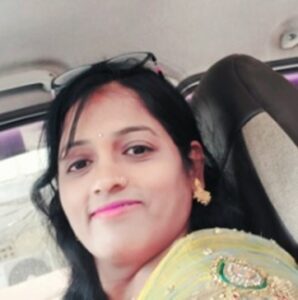
Dr. Madhavi Latha A. holds a Ph.D. and M.A. from Osmania University, along with a PGDTE from EFLU. She has also qualified for the Telangana State Eligibility Test (TS SET). Currently serving as an Assistant Professor of English at Anurag University, she brings over 15 years of teaching experience. She is also a research supervisor, guiding scholars in the field of Feminism.
Dr. Latha has completed several NPTEL courses and actively engages in Faculty Development Programs and academic workshops. She has presented numerous papers at both national and international conferences, with several of her works published in reputed journals indexed in Scopus and UGC.
She has co-authored three books, contributing meaningfully to the academic discourse in English Language and Literature. In addition to her academic publishing, she has shared her expertise as a resource person at ALAPAN in West Bengal and also for an ISO-certified institute, further extending her academic influence beyond the classroom.